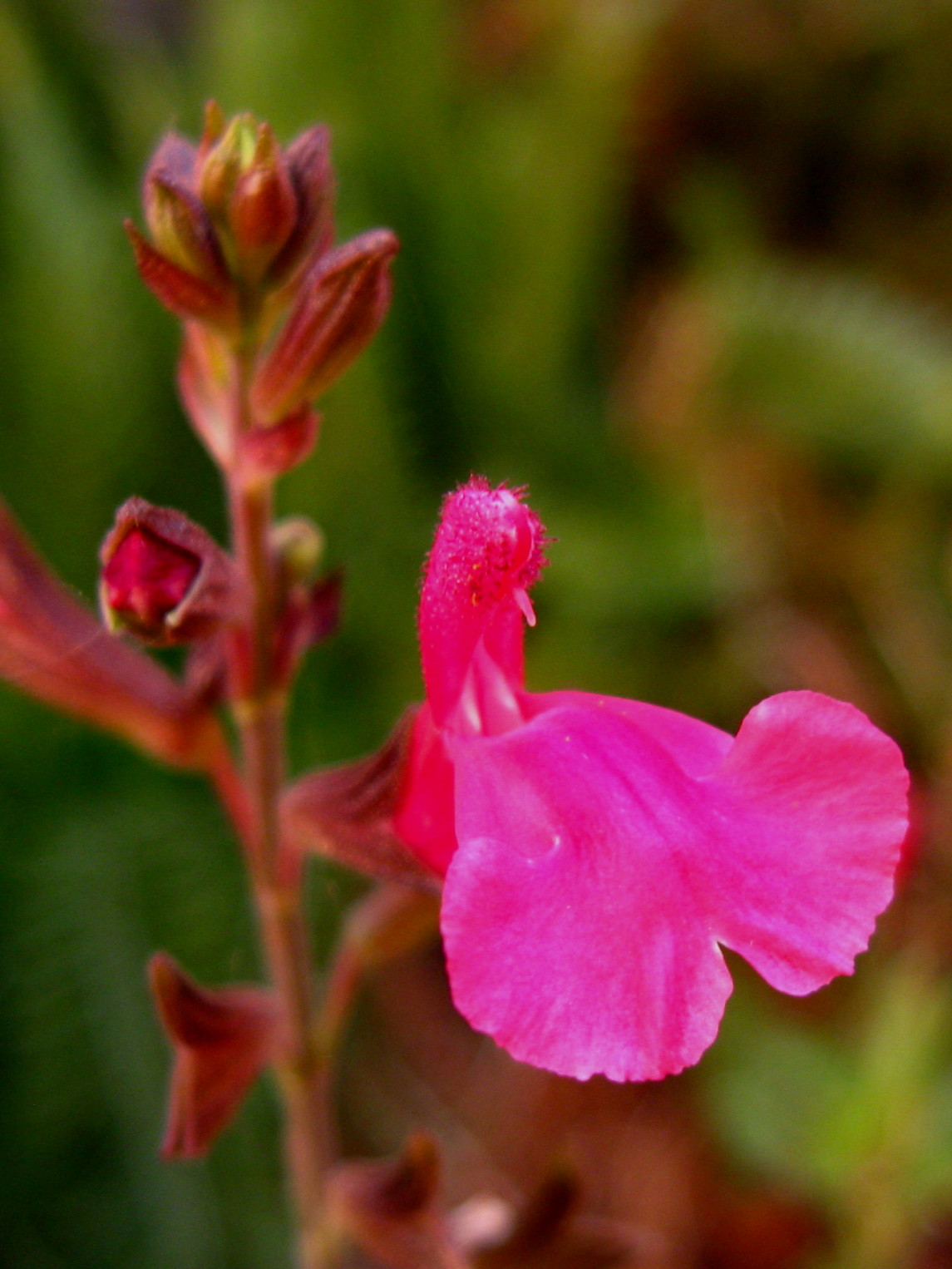
Showing posts with label habitat. Show all posts

Wednesday, April 20, 2011

A Balancing Act

or The Earth Day Reading Project

As I was walking the circle path around the garden the other day, I was dismayed to discover this:


Leaf-curl plum aphids had invaded my biggest, shaggiest monster of a sand cherry—one of the inner branches was pretty well lost to the world by the time I discovered it.  These are tricky aphids (for me) to get rid of—they curl the leaves around them and become impervious to sharp sprays of water.  Even if I were to use pesticides (which I don't), it's doubtful whether the pesticide would reach them.  Thinking back to my first year here, when the garden was decimated by the nastier types of insects, and worried about a repetition, I took hasty action and clipped the two worst branches off, hoping to nip the the problem (as it were) in the bud.

I should have trusted my garden, trusted the effect of the last few years spent filling the bug-bath with water twice a day, providing sheltering mulches and ground-covers, and planting nectar-rich flowers to ensure constant bloom—all the things needed by the beneficial insects that keep the pests in check.  Because look at what was on the undersides of the leaves:


Lady beetle eggs.  Half a dozen leaves with clusters at the bases.  The natural process had worked; the aphids would have been brought under control without my intervention (and boy, was I disgusted with myself for having gotten in the way).  Fortunately, more lady beetles are ready to replace the ones I pruned away—I spotted eight of them, including two mating pairs, in a one-foot area yesterday.  It looks as if the process is still working in spite of me.  In fact, if you're not squeamish, look at what this lady beetle is munching on  (as always, you can click to enlarge) (if you're into that kind of thing):


Death and destruction come to the aphids.  Bwahahahaha.

I've written more about the ways I've learned to protect my garden elsewhere.  For now, I want to pay tribute again to Sally Jean Cunningham's Great Garden Companions, the book that taught me that organic gardening isn't about gardening "normally," only using wimpy pesticides and fertilizers instead of the chemical kind; rather, it's about creating ecosystems that can be self-balancing, about creating a place where all kinds of lives (including pests', and including yours) have their needs met.

_______________________________

Jean Potuchek, who writes Jean's Garden, invited me to take part in the Earth Day Reading Project organized by The Sage Butterfly, to "list at least three books that inspired you to perform any sustainable living act or inspired you to live green, and then tell us why they inspired you."  In addition to sharing her gardens in Maine and Pennsylvania, Jean writes regular book reviews.  Her discussion of Doug Tallamy's Bringing Nature Home made me wish that it had been one of my inspirations.  Alas, it hasn't yet, but only because I am behind the game.  Instead I would like to point the inquiring reader to:

1)  Cunningham's Great Garden Companions.  Cunningham gardens in Tompkins County, New York, with acidic soil, 180+ cloudy days per year, 35 inches annual rainfall, and frequent sub-zero F winter temperatures.  I garden in the high desert of New Mexico, with 300+ days of sunshine annually, 8 inches of rain, "soil" (ahaha) so alkaline that it bubbles if you pour vinegar on it, and baking summer heat.  Cunningham's ideas work just as beautifully here as they (apparently) do in New York.

2) Willa Cather's Death Comes for the Archbishop.*  A fictionalized account of the life of Jean-Baptiste Lamy.  I don't know that this book has pointed me to a particular action, but its appreciation for the southwest has reminded me what a fierce love for a landscape is like.  Perhaps the strongest urge to protect the land comes not from those who are most idealistic about it but from those who understand it best, who love it the most passionately.

3) Amy Dacyczyn's Tightwad Gazette.  Dacyczyn (pronounced like "decision") is the voice of radical frugality, but she also makes (what should be but apparently isn't) the obvious point that consuming less takes less energy and produces less waste.  Dacyczyn essentially opts out of the capitalist credo that more is more.  She lives abundantly by being creative and working hard—and by thinking for herself about what she does or doesn't need, rather than letting Madison Avenue do the thinking for her.** 


I encourage you to visit some other blogs as well where the authors take different approaches to sustainable and/or green living.  B_a_g at Experiments with Plants chooses to grow extra plants for the slugs rather than put out slug pellets.  Diana and Jurg at Elephant's Eye give thoughtful homes to wounded sparrows and provide bathing ponds for wagtails and dragonflies.  Nate at The Scholar's Garden is currently swamped with scholarly work, but he is also busy creating homes for bees and embracing a green growing lifestyle at an age when I was perfectly happy with mega-stores and "big ag," and ready to use pesticides if they just got rid of the bugs.

Even if they got rid of all of the bugs.
_________
*  Spoiler alert:  The archbishop dies in the end.

**In a roundabout way she reminds me of Dorothy Sayers' Murder Must Advertise, a mystery novel written in the 1930's, whose amateur sleuth, Peter Wimsey, goes under cover in an advertising agency.  He has a horrible time finding paper evidence of a crime, because all of the paper in the office is recycled.  In the 1930's.  When people thought that being frugal was a virtue, and that re-using things was common sense. 

Wednesday, April 13, 2011

The Chicken

Spring leaves with last summer's fruit
or The Egg

You wouldn't believe how long I debated which of those titles should come first.  A disclaimer, though—no actual chickens (or eggs) were involved in the making of this post.  We're in metaphorical chicken-and-egg land, thinking about priorities in general.  My desert olives have been blooming, you see, and for some reason, those trees always make me think.  (Just wait until I start pruning them—then the philosophical excitement really begins.)

Desert olive (or New Mexico olive, or NM privet) (Forestiera neomexicana)

Let's step back a bit.  A recent kerfuffle on Garden Rant reminded me of the book Plant-Driven Design, by Scott Ogden and Lauren Springer Ogden.*  The basic premise of the book is that gardens are more satisfying when plants, rather than hardscape, are the starting point of the design—an idea most gardeners I know would agree with, but maybe not (some) landscape designers.  I certainly have a number of books on small garden design that go nuts about expensive brickwork, expensive water features, and theatrically expensive lighting designs, and then describe the plantings only as "mixed borders."  The Ogdens focus instead on landscapes where each plant is allowed to showcase its strengths, where its character is given a chance to shine.  At one point, they talk about facing a choice in their own garden about whether to prune a tree drastically to make room for a path, or to move the path to allow the natural character of the tree to develop; they chose to move the path.

Male tree
To return to the desert olives.  I planted them for all kinds of sensible reasons, but one of the most important was that they provided food for songbirds.  That is, some of the trees do.  This species has separate male and female trees.  Both are needed to produce fruit, but (obviously) only the female plants have actual "olives."  If you plant them young enough so that they stand a chance of surviving (at least, in my garden), you won't be able to tell which is which—you just plant several and hope for the best.

My very first plantings in the garden were three desert olive trees, two of which have turned out to be female, and one male—the optimal mix.  Today, several years on, even without the fruit as a guideline I can see the difference:  the male tree's blossoms are more golden, and they open before the leaves do.  They have a faint scent—one book describes it as honey, but I would describe it more as "proto-honey," maybe just the scent of nectar—which the bees love.  The female trees have (so far as I can tell) scentless, greenish blossoms that open with the leaves.**

Female tree

I can't help wondering what I would have done, though, if all three trees had been female (or male).  Would I have uprooted a perfectly healthy tree and killed it, replanting in the hope of mixing the genders?  (It's a small garden—planting more isn't an option.)  I certainly enjoy the trees on their own merits, but half the point of planting them was to provide food for songbirds.   What is the threshold of choice, between what I keep and what I discard?  What do I prioritize?  What comes first, the tree's life (a tree! not some measly annual!) or the birds' winter food?  I don't have a ready answer, and fortunately I don't need one this time around.  But I can't help wondering what I might have done, or how others have solved these problems; what kinds of choices you've made, which "small" lives you've prioritized, when it comes to the habitats you've created in your own gardens.

What comes first?

________________________
* I understand (deeply) what the critics say about the authors' self-righteous tone.  But for a westerner (or for anyone from a climate that's light on medieval ruins and mossy statues of Greek deities, and heavy on drought-tolerant grasses, sunflowers, and their ilk), it's a fabulous book.  Its photos show actual western gardens, none of which feature a stark but brightly painted adobe wall, yards of gravel, and a single sculptural yucca.  The photos (and descriptions!) instead show lush plantings that actually grow in the west (i.e., that 50% of the U.S. that is completely neglected by 98% of American gardening books).  When you're used to extracting only general principles of design from a book while discarding all the actual information, it's a pleasure to be able to use the information, too.  (Diana @ Elephant's Eye in South Africa—you might enjoy this one.)

A disclaimer that is not about chickens this time:  I have not been paid a blessed thing to review this book, gosh darn it.  These are my own (all too freely expressed) opinions, independent of the influence of filthy lucre.

** Both genders have what can only be described as insignificant blooms—I promise I'm not obsessed!***

*** But wait until I get going on the salad burnet!

Wednesday, August 18, 2010

On Not Spitting into the Wind

or Matching Games

I'm sketching this post from my favorite chair by the kitchen window, the one that lets me overlook the garden.   A storm is brewing, though so far it's all sound and fury and no rain, like so many of our storms.   It's impressive enough, but it would be nice to be drenched as well.

Still, the wind is impressive.   It has bent the supple branches of the desert olives nearly double and bowed many of the perennials nearly flat to the ground; the sand cherries are whipping around like dune grasses.   We get very little severe weather here in Albuquerque—or, put another way, the severity of our weather mostly happens over the long haul.   We may live perpetually on the edge of killing drought, but at least we don't have tornadoes, blizzards, floods, hail, or ice storms.

What we do have is wind.   Every so often I catch glimpses of why some of the early pioneers went mad from the relentlessness of the winds.   Spring is the only season when it's really excessive, but it blows plenty often the rest of the year, too.   The true test of a plant out here—and possibly of a person—is how well it holds up against those fearsome blasts of wind.   As a general (and obvious) rule, the more native the plant, the better able it is to cope.   Our oft-scorned native redroot amaranth, with its small, widely spaced leaves, still looks fresh and whole, even in the middle of a storm; the broad, beautiful leaves of my much-loved burgundy amaranth are shreddy and battered.   The wildflower yarrow stems spring back into place almost as soon as the wind stops; my "Coronation Gold" yarrow bent at a 45° angle after our first big wind storm and has leaned lower and lower ever since.   The sweet potato vine and chard in the micro-garden are getting ripped apart; the purslane looks as good as new.

Like all of us, plants shine best under certain conditions—the key is to match them up properly.   I'm reminded of a day-trip I took a couple of years ago to Abó, an old mission site that is part of the Salinas Pueblo Missions National Monument.   It lies on a dirt spur road off U.S. 60, in the middle of low hills and scrub desert.

Salinas Pueblo Missions National Monument

In the parking lot at the visitor's center that afternoon were two vehicles other than mine—a bright red Corvette with California plates and a New Mexico sky blue, 1950's Ford pickup with those wonderful  rounded wheel wells and hood.   In that place the Corvette was like a pair of stiletto heels on a hiking trail—out of place and a little silly.   It looked expensive, but in a worrying sort of way; I found myself wondering about its clearance and thinking about the windshield getting dinged up on the dirt road.   The Ford, on the other hand, radiated the cool of an old pair of Levis—classic, comfortable, even honest.   It was a harmonica blowing at sunset, chiles roasting over an open fire, feet up on the porch rail at the end of a long day.   Some things just go, and that Ford belonged out there in the desert in a way the Corvette never could.   It's all about being suited to the circumstances, about reflecting the actual reality around you rather than the hothouse atmosphere of another place, of wishful thinking.

The storm has passed for now.   I do a quick look around to assess the damage.   Some of the drumstick allium seedheads have broken off (which is fine, as I'm rather tired of them), but the native Mexican hats look invigorated, ready for another round.   Both flowers "bloomed where they were planted," a phrase which is all very well in its way.

But it works best if you get yourself planted in the right place to begin with.

Saturday, July 24, 2010

Mea culpa, mea culpa, mea maxima culpa

Agastache rupestris
or Okay, okay, mea maxissima culpa!

The guilt-inducing power of many of the world's religions is impressive, indeed; almost as impressive as the power of certain mothers I have known (though fortunately not mine).   But if you want to experience real sackcloth-and-ashes, chest-pounding, gnashing-and-wailing self-recrimination, try pulling up a gardenful of Agastache rupestris, otherwise known as licorice mint.

Also known as hummingbird mint.

Hummingbirds love it.   A lot.   It turns out that in addition to being beautiful, feisty, and territorial, black-chinned hummingbirds are astonishingly good at making a grown woman feel very, very small.

Agastache rupestris
In my defense, let me say that I, too, love licorice mint.   A sturdy, drought-tolerant native of the American Southwest, it has airy, sage-green leaves, salmon-colored bloom spikes that last from mid-June to November, and a clean, anise-y scent.   It is one of my favorite plants of all time.   At one point, I had seven of them in my little garden, and if they had stayed the 24-30 inches tall and 18 inches wide that my garden books and catalogs promised me, I would have kept them all.   Instead, they grew to be five feet tall and 3 feet wide.   The hummingbirds were thrilled, but I could not find the garden beds, the paths, or Luther T. Dog.   And these were just immature plantings.   So this year, out they came, to be replaced by mild-mannered and above all short plants.   I still have two of them, which are suffering in containers but may survive the summer; the rest I gave to a friend.

For the record, I did not neglect the hummingbirds.   Theoretically, they are supposed to adore the blooms of autumn sage (Salvia greggii) and pineleaf penstemon (Penstemon pinifolius).   They do adore them—I have observed them in the very act of adoring them in other people's gardens—and so I planted a number of both.

"Wild Thing" Autumn Sage
Which the hummingbirds ignore magnificently.   (And ignoring "Wild Thing" autumn sage isn't easy.)   Instead of sampling the new plantings, the hummingbirds go to every place where an agastache used to be.   They hover.   They waste calories you know they can't afford.   (Don't you realize that they will have to migrate hundreds of miles south in just a few short months?   And in the meantime, they have mouths to feed—young, helpless nestlings to strengthen for the long flight!)   They find you in your comfy patio chair and hover in front of you, just to be sure they have your attention, and then return to the former homes of the agastache.  Each plant.   In turn.  (They remind you of Lassie trying to catch the attention of the obtuse parent while little Timmy is in danger.   Only Lassie is starving, and it is you who have stolen her favorite food dish.   Because you didn't like it.) 

They come back to hover in front of you a little more.   (Don't you know that hummingbirds have to consume more than their own weight in nectar every day??   Their 1,000 beats-per-minute heartrate doesn't just maintain itself, you know!)   They test the drumstick allium blossoms and turn away in disgust.   (They can literally starve overnight!   To death!   If they don't get enough nectar!)   Weary, they perch in a tree branch and look at where the agastache should be.   And then at you.   (So what if your neighbors—twenty feet away—have feeders that could keep every hummingbird in town fat and sassy all summer?   Sugar water is just Not the Same.)   They fly over to the finch feeder, a decorative jobby that happens to be their favorite shade of red.   (Ooh—sorrysorrysorry.)   They tap on it.   (And if the starving Lassie had risked her own life to rescue Timmy from the collapsed mine, you would have rewarded her with a rubber bone.)   They hover at you some more.  (Have you no shame?!)   Repeat daily.

Lately when they hover at me, I gesture at the autumn sage, which is blooming its little head off.   "Look here," I tell them,  "Just because you're used to eating prime rib, that doesn't make filet mignon a bad thing."   They feed at last.  One sip from one bloom on each plant.   One.  And then they return to where the agastache used to be and hover.   (Sigh.)

Guilty as charged, little ones.

Wednesday, July 14, 2010

Mi jardín es su jardín

or
Share and Share Alike

I expected gardening to be about plants; I didn’t expect it to be quite so much about morality.  Carol Gilligan’s In a Different Voice describes morality as the struggle to balance the needs of the self against the needs of others.  A variant on the idea of loving your neighbor as yourself, it brings the occasional (frequent?) tension between the two into the foreground in a way that I find rather a relief.

I had originally planned my garden as something approaching a potager, with native fruiting bushes and Mediterranean herbs in a semi-formal design, and vegetables grown in containers.  I live in a new, urban infill development which, when I moved in, was still surrounded by vacant, weed-infested land.  I was the first of my neighbors to plant anything, and that first summer, every leaf-roller, aphid, potato leaf-hopper, flea beetle, and cabbage moth in the neighborhood descended gleefully on my fledgling garden.  My infant trees were leafless by July, every tomato had withered with curly top virus, and the vegetable greens were all eaten away to the midrib.  Only the native plants and herbs survived.  (You can pretty well bet that any plant native to New Mexico does not need a lot of coddling.)

I read more widely about organic forms of pest control and, at my sister’s recommendation, came across Sally Jean Cunningham’s Great Garden Companions.  Cunningham suggests creating a welcoming environment for garden beneficials by including habitat plants, introducing water at ground and (human) waist height, and interspersing nectar-rich flowering plants among your edibles.  This attracts beneficial insects (and other wildlife like toads and birds), which will then keep the pests down to manageable proportions.

Since then, I've tried to apply Cunningham's principles, which are partly about attracting, but essentially about sharing.  The bird and bugbaths are always filled.  The portion of my garden given to flowers and habitat plants has grown, and the part devoted to edibles has shrunk.  I grow vegetables primarily in a 2’ x 4’ “micro-garden” (the main planting area is about 15' x 15'), and while I still have fruit bushes and herbs, the rest of the garden is “beneficial” planting.  The air hums with honeybees and bumblebees.  Mr. Jackson overwinters in my potted mint.  Finches maintain a running commentary from the tree branches.  And I have seen hoverflies, orb weavers, lace wings, praying mantises, lady beetles, and parasitic wasps enjoying the flowers, the water, and the aphids.  The pests are minor irritations rather than plagues (though the leaf hoppers still get to my tomatoes every year, confound them!).

In “sacrificing” growing space to foster an ecosystem, the ecosystem has given back to me.  In giving more of my garden over to nurturing the urban wildlife, the part I have reserved for myself has flourished.  My harvests have increased (and the headaches have decreased) as I have learned to balance my own needs against the needs of the creatures in my environment—even the pests among them.

Is this morality?  Enlightened self-interest?  Good karma?

Or is it just the way things are supposed to work?

Monday, June 21, 2010

Toad Hall

or


A Place for Everything,
and Everything in A Place


What I love about toads is the way they ignore me. They're useful bug-eaters, of course, and I appreciate that. But I love the way they go about their business as if--well, as if I didn't particularly matter to them.

My garden has a toad--a chubby, unflappable, cool cat of a toad--that has made itself at home in a potted mint plant. In my ongoing quest to encourage murder and mayhem in the garden (but only the good kind of murder and mayhem), I've tried to create a toad-friendly habitat. I've provided a "bug bath," a shallow dish filled with pebbles and water at ground level; and I've created toad houses from broken pots and cinder blocks, hoping that the shaded hollows would appeal to a cold-blooded creature during the heat of the day. And instead of these cool, private shelters, "Mr. Jackson" prefers the potted mint that sits in the sunshine on the patio. Every morning while I sip my tea, I watch him hop over from some other part of the garden and clamber awkwardly into the pot. I harvest the mint regularly; he blinks at me. I water it daily; he blinks at me. I occasionally whap him with the hose by accident; he blinks really quickly at me.

It's not even a pretty pot.

In its own mild way, the situation radiates a whole "the best laid plans" thing that I regard with wry amusement. (I'm reminded of how I originally designed my garden around Luther's habits. He always used one area as his privy, so I made a clear pathway to it and left it unplanted. He never went there again. That area is still an odd, empty space that nothing seems to fill properly.) In another way, it's eloquent of the best spirit of gift-giving--that a gift, once given, takes on a new life, new meanings, in the hands of the recipient.

The real gift in this case was water--as good as gold in a region that gets eight inches annual rainfall, and much more interesting to a toad in any case. The "bug bath" is what drew him and what encourages him to stay. One morning when I had forgotten to refill it, I found him looking at it (blinkingly) and watched him stretch out a foot to the basin and rest his chin on one of the dry pebbles. He stayed that way until I had filled the dish with water (he didn't bother to move), and after a good soak he went merrily about his business (which was to climb into the mint pot).

Of course, the water wasn't a real gift if I was hoping to get something out of giving it--a toad at my beck and call, ready to eat ants and flies on demand. I did get a toad, yes, but beck and call? Not noticeably. And I find his complete obliviousness to the choices I had pre-made for him so beautiful that it almost takes my breath away. The sense of interaction--of creative give-and-take with an alien species--fills me with delight, and that is far more wonderful than the smug satisfaction I would have felt had he moved into those concrete blocks. Above all, I can't help wondering now what he will do next, and what pleasure I might have in responding to his new choice.