Cleaning out a garden bed in late winter reminds me of cleaning out the garage, if cleaning out the garage were fun. At some point in your efforts you reach the bottom of a pile of something or other and make a discovery: "So that's where (something or other else) ended up!" Long-lost treasures emerge from the forgotten recesses of time, kind of thing.

Like the occasional rosemary bush. I certainly wouldn't claim to have forgotten that one was growing in the bed with the 'Wild Thing' autumn sage; after all, I've been pillaging it for soups and stews all winter long. It's small enough, however, that it normally has the added charm of invisibility. When I'm looking by fading daylight for some rosemary for a recipe, I find it by feel and smell as much as anything. I seldom actually see it, and never in its full glory. Pruning 'Wild Thing' away revealed the rosemary in its visible form. After all these months it's a little startling to remember that it has one.

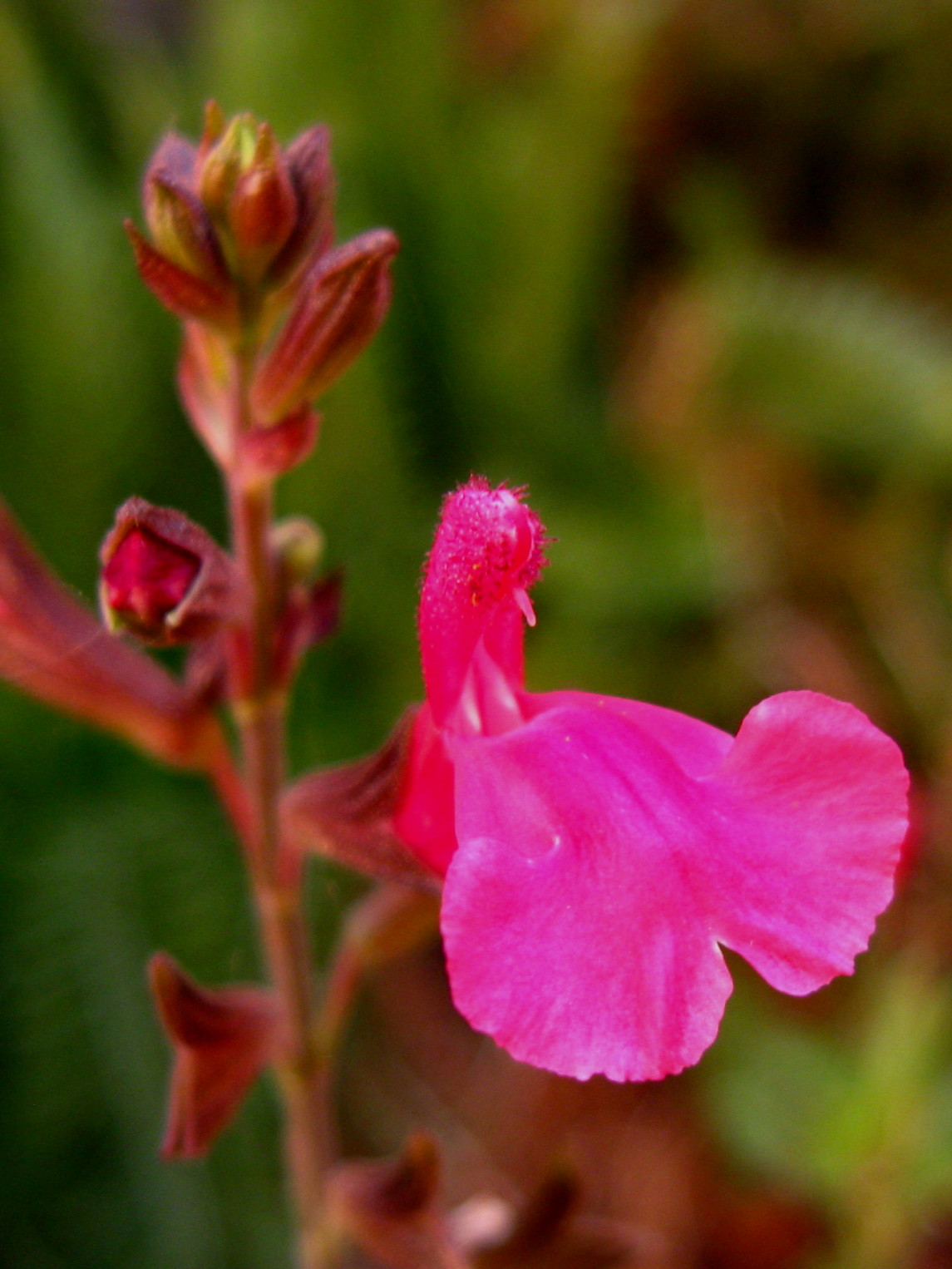
The Arp rosemary is supposed to be (and in another couple of years will be) one of the anchors of this bed, along with a Mormon tea (Ephedra viridis) and the three autumn sage. I'd found the combination in the Curandera Garden at the Albuquerque Botanic Garden. Horsetail reeds were growing there in a water feature across the path from a shaggy beast of a rosemary, their twiggy and feathery forms making an intriguing counterpoint; the hot, neon pink flowers of 'Wild Thing' autumn sage (Salvia greggii) offset the other plants' muted greens; and the whole color scheme was sent soaring by containers of orange and yellow French marigolds. The hot colors may have been a little...vivid, but in the equally hot September sunshine they radiated New Mexico flair at its most exciting and alive. In my own garden I substituted Ephedra for the horsetail, and 'Mersea Yellow' pineleaf penstemon (Penstemon pinifolius) for the marigolds. Then I added in some wine cups, a couple of gaura, a Mojave sage, a Lady Banks rose, some marguerites... But other than that, the combination is the same.
One reason that the rosemary startled me when it turned visible again is that in my head, it is already the four foot tall anchor of that bed. I have a vision of Rosemary Yet to Come, and in some small, subconscious way I forget that it is, indeed, yet to come. In addition to seeing some futuristic rosemary, I'm also recalling stems and greenery that are no longer there, and all the dinners they gave me: the truly delicious chicken and barley soup on a blustery evening; the safe stand-by dish of baked lentils and rice; the uninspired but edible pasta sauce (it's hard to go too far wrong with pasta sauce). The Ghost of Rosemary Past still glimmers happily in the present.
 |
| The parts that you don't see were really tasty. |
I didn't exactly use a recipe to create any of those meals, unless you count the lentils and rice, which in their original form featured ginger and Thai red curry paste instead of rosemary, bay leaf, and garlic. (I still think that at heart they're the same recipe: lentils, rice, water, and flavorings. It's just that the flavorings have been tweaked a bit.) But you know how it is. You substitute one thing here and another there; you find some sort of equivalent; and it all kind of works out, more or less, at the end. Or so you hope. The first taste of the finished dish once you're seated at the table is the moment of truth. Then you discover whether what you thought you were cooking resembles what you actually cooked. Visions of an ideal future dissolve in present reality.
The rosemary is still caught in that creative time warp, where its present is all wrapped up in an ideal future. Its bed is in the "cooking" phase, its moment of truth Yet to Come. In the meantime, until it winks back into invisibility behind the autumn sage, the Spirit of Rosemary Present isn't really about the present. It's about creativity, possibility, hope—all kinds of things.
Just not about the small, evergreen plant that it is.